
 Call:
Call:  Mail:
Mail: 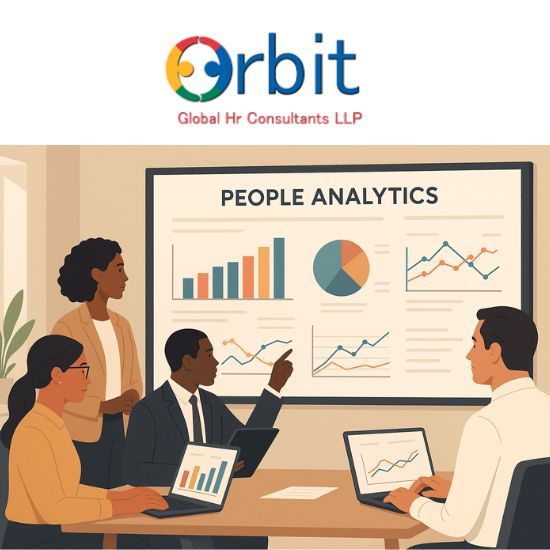
If we look at the workplace today, one thing is clear — talent decisions can no longer rely purely on gut feeling, instinct, or past experience. Businesses are evolving, roles are changing faster than ever, and employees expect more transparency, growth, and purpose.
So, how do HR leaders stay ahead?
By turning people data into meaningful, actionable insights.
That’s where People Analytics, also known as workforce analytics, steps in — and it’s quickly becoming one of the most powerful tools in modern HR. In fact, according to Mordor Intelligence, the adoption of HR analytics is rising rapidly across industries, with more companies investing in data-driven HR strategies each year.
✅ What Exactly Is People Analytics?
In simple words — it’s the practice of using employee- and workforce-related data to make smarter HR decisions.
This data can come from:
- Recruitment and assessment platforms
- Employee surveys and engagement tools
- Performance and productivity systems
- HRMS, LMS, payroll, attendance & HR tech tools
- Exit interviews, feedback, and onboarding data
The goal isn’t to reduce people to numbers — it’s to understand patterns, behaviors, risks, and opportunities that help organizations build stronger teams.
✅ Why People Analytics Matters Today
HR isn’t just about hiring and policies anymore — it’s about business outcomes. And data helps HR leaders:
🔹 Hire the right talent faster
Identify what skills, behaviors, and experiences predict success.
🔹 Improve retention
Spot early warning signs of disengagement or future attrition.
🔹 Strengthen culture & employee experience
Measure what employees actually feel — not what leaders assume.
🔹 Build stronger teams & leaders
Understand strengths, gaps, collaboration styles, and skill readiness.
🔹 Support strategic workforce planning
Plan for future skills, automation, and succession needs.
When used responsibly, People Analytics turns HR from reactive to proactive.
✅ Real-World Use Cases Companies Are Already Using
- Analysing recruitment funnel drop-offs to reduce hiring delays
- Predicting employee turnover before it becomes a business risk
- Benchmarking compensation to stay competitive in tight talent markets
- Mapping leadership potential for succession planning
- Evaluating the impact of training and development programs
- Identifying high-performing teams and what makes them successful
These aren’t “future possibilities” — many organizations are doing this today.
✅ Key Trends Shaping Data-Driven HR
The rise of People Analytics isn’t accidental — it’s driven by workplace realities:
- HR Tech adoption is accelerating
- Hybrid & remote work require better visibility
- AI-driven tools are becoming more accessible
- Companies need transparency and measurable ROI
- Talent shortages demand smarter hiring decisions
What used to be a “nice to have” is now business-critical.
✅ The Challenges — Let’s Be Honest
Not every organization can adopt People Analytics overnight. Common hurdles include:
- Data scattered across tools and teams
- HR teams not trained in analytics
- Privacy, ethics, and confidentiality concerns
- Resistance to change — “we’ve always done it this way”
- Leadership hesitation to trust data over intuition
The solution? Start small, stay consistent, and choose tools and partners wisely.
✅ How Companies Can Begin Their People Analytics Journey
You don’t need sophisticated dashboards on day one. A simple roadmap works:
- Identify the problem you want to solve — don’t just collect data
- Clean and centralize existing HR data
- Choose one or two metrics that matter most
- Develop internal HR analytics capabilities
- Communicate insights clearly — not just numbers
- Keep it ethical, unbiased, and employee-focused
Analytics should support better decisions — not replace human judgment.
✅ The Executive Search Perspective — Data + Experience = Better Hiring
At leadership and strategic hiring levels, analytics becomes even more valuable.
It helps organizations:
- Define success profiles more accurately
- Reduce bad hiring decisions and replacement costs
- Evaluate cultural alignment and long-term fit
- Understand market trends, availability & compensation benchmarks
- Improve diversity, equity & inclusion outcomes
The hiring conversation shifts from “We think they’re right” to “We know why they’re right.”
✅ Orbit Global HR Consultants’ Approach
At Orbit Global HR Consultants, we believe great hiring blends:
- Business understanding
- Human expertise
- Market intelligence
- Behavioral insights
- Data-backed decision-making
Whether it’s leadership recruitment, niche talent, IT, Non-IT, or scaling teams, our approach helps organizations hire smarter — not just faster.
Because when data meets intuition, hiring becomes a strategic advantage.
✅ Final Thought
People Analytics isn’t about replacing humans with numbers.
It’s about supporting better human decisions with meaningful insights.
Organizations that embrace data-driven HR today will build stronger teams, healthier cultures, and more resilient businesses tomorrow. Get Direction

Leave A Comment
You must be <a href="https://orbitglobalhr.in/wp-login.php?redirect_to=https%3A%2F%2Forbitglobalhr.in%2F2025%2F11%2F22%2Fpeople-analytics-data-driven-hr-impact%2F">logged in</a> to post a comment.