
 Call:
Call:  Mail:
Mail: 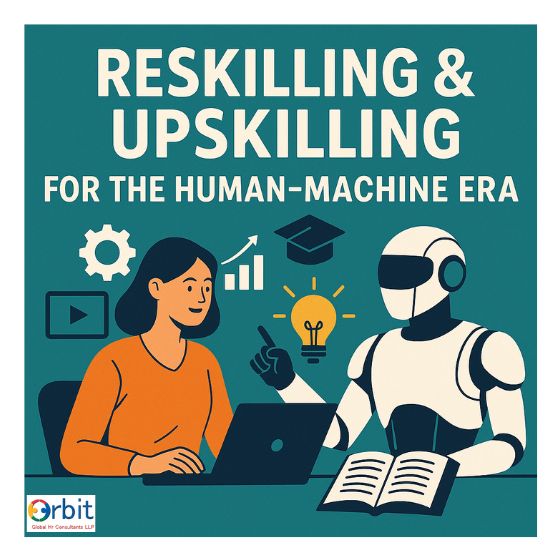
Introduction
The Human-Machine Era isn’t a distant future—it’s happening right now. Automation and AI are reshaping how people work, learn, and grow. And while this shift offers incredible opportunities, it also demands a new kind of workforce—one equipped with skills that evolve as fast as technology does.
That’s where HR comes in.
As trusted advisors inside their organizations, HR teams have the power to guide people through change, close skill gaps, and help companies stay competitive. This blog breaks down what HR leaders need to know about reskilling and upskilling today—and how to build strategies that actually work.
Understanding the Human-Machine Era
What Automation and AI Mean for Today’s Workforce
Automation isn’t just taking over repetitive tasks. AI-driven tools now support decision-making, customer service, recruitment, and even creative work. This means every role—regardless of level or function—is changing.
Employees who once relied on manual processes now need to work alongside smart systems. This shift requires new abilities like data literacy, problem-solving, digital fluency, and adaptability.
Why Skill Gaps Are Growing Faster Than Ever
According to Gartner, emerging technologies are accelerating the pace at which old skills become outdated. Organizations now face continuously expanding skill gaps, often faster than they can hire for them.
And that’s exactly why internal skill development is becoming a strategic priority.
The Critical Role of HR in Skill Transformation
Guiding Workforce Strategy
HR is uniquely positioned to connect business needs with people strategies. That includes:
- Evaluating skill readiness
- Forecasting future capabilities
- Advising leaders on employee development
HR plays a strategic role—not just operational—in helping organizations adapt.
Building a Culture of Continuous Learning
Employees engage more deeply when learning feels accessible, relevant, and supported. HR can create this environment by:
- Making training easy to access
- Rewarding learning progress
- Encouraging managers to support development goals
Why Reskilling & Upskilling Are No Longer Optional
Gartner Insights on Emerging Skills
Gartner’s research highlights a crucial trend: AI adoption increases the need for new digital and interpersonal skills, not just technical ones. Workers who develop hybrid skills—like communication plus data analysis—become significantly more valuable.
How Digital Transformation Impacts Every Industry
Whether you’re in logistics, healthcare, finance, or retail, digital tools are reshaping workflows. Organizations that invest in learning stay agile. Those that don’t risk falling behind.
Building a Future-Ready Workforce
Identifying Current and Future Skills
HR teams should start by assessing:
- Existing workforce capabilities
- Skills future job roles will need
- Gaps that must be closed within 1–3 years
Tools like competency assessments and digital skill audits can help.
Mapping Job Roles to New Capabilities
Modern job roles are evolving, often blending technical and soft skills. For example:
- HR professionals need to understand AI recruiting tools
- Sales teams need analytics skills
- Operations teams must understand process automation
Mapping these changes early gives employees a roadmap for growth.
Designing Effective Reskilling Programs
Practical Frameworks HR Teams Can Use
One effective model is the 70-20-10 Learning Framework:
- 70% learning through experience
- 20% through peer interaction
- 10% through formal training
This structure keeps programs balanced and impactful.
Choosing the Right Learning Methods
HR can offer a mix of learning options, such as:
- Microlearning modules
- Peer mentoring
- Virtual training
- Hands-on project assignments
- Job shadowing
Blending formats keeps learning flexible and engaging.
How HR Can Lead Upskilling Initiatives
Encouraging Learning Ownership
Employees are more invested when they feel in control. HR can support this by:
- Offering personalized learning paths
- Providing clear expectations
- Giving employees time to learn during work hours
Tracking Progress and Measuring Success
Key metrics include:
- Training completion rates
- Skill assessments
- Productivity improvements
- Employee feedback
Tracking ensures your programs stay aligned with business goals.
Tackling Common Challenges in the Reskilling Journey
Overcoming Employee Resistance
People often resist change due to fear or uncertainty. HR can help by:
- Communicating benefits clearly
- Sharing success stories
- Offering supportive coaching
Securing Leadership Buy-In
Leaders invest in programs when they see impact. Highlight ROI through:
- Improved performance metrics
- Cost savings from internal talent mobility
- Reduced hiring dependency
Real-World HR Examples
Many organizations worldwide are already embracing skills-first talent strategies. Companies such as AT&T and Amazon have launched major reskilling initiatives, investing billions in employee development to stay ahead in digital transformation.
Technology Tools That Accelerate Skill Growth
AI-Based Learning Platforms
Modern learning platforms personalize content based on employee behavior and performance—helping teams learn faster.
Skills Mapping and Talent Analytics
Analytics tools help HR predict future needs and identify hidden potential in the workforce.
Creating an HR-Led Culture of Learning
Incentives and Recognition
Rewarding learning achievements keeps employees motivated. Simple gestures—like badges or internal shoutouts—can make a big difference.
Building Learning Communities
Internal communities help employees learn from each other, ask questions, and stay engaged.
Practical Tips for HR Leaders Ready to Start
Here’s what HR teams can do in the next 90 days:
- Conduct a skills gap analysis
- Build a simple learning roadmap
- Partner with managers to support training
- Launch a microlearning pilot program
- Celebrate early wins to build momentum
FAQs
1. What’s the difference between reskilling and upskilling?
Reskilling prepares employees for new roles, while upskilling enhances skills for their current roles.
2. How often should HR reassess skill gaps?
Ideally every 6–12 months, especially in fast-changing industries.
3. Is AI replacing HR roles?
No—AI enhances HR by automating repetitive tasks, giving HR leaders more time for strategy and people development.
4. How can HR motivate employees to learn?
Offer incentives, provide flexible learning options, and ensure manager support.
5. What’s a credible resource for staying updated on HR trends?
Conclusion
The Human-Machine Era is here—and HR has never been more essential. By guiding teams through reskilling and upskilling, HR leaders can ensure their organizations stay adaptive, resilient, and future-ready.
If you’re ready to develop a powerful skills strategy tailored to your workforce, Orbit Global HR Consultants is here to help. Contact us today to get started.Get Direction

Leave A Comment
You must be <a href="https://orbitglobalhr.in/wp-login.php?redirect_to=https%3A%2F%2Forbitglobalhr.in%2F2025%2F11%2F26%2Freskilling-upskilling-human-machine-era%2F">logged in</a> to post a comment.